Every year, large quantities of textiles are generated that are difficult or impossible to recycle using conventional methods – such as multi-layered fabrics, materials with coatings or a high elastane content, heavily printed textiles, or contaminated waste. These often end up being incinerated or sent to landfill. This is precisely where BeyondRecycle comes in, developing solutions to put these waste streams to good use.
Our approach
In this project, we combine AI-supported detection and sorting to precisely identify and separate problematic textiles from mixed waste. The residues obtained in this way are then processed into high-quality ceramic matrix composites, in particular silicon carbide or boron nitride carbide, to make them particularly light, hard and durable. By using processed textile fibres as reinforcement, the materials become even more robust and less prone to breakage, enabling them to better withstand stress and temperature fluctuations.
Problematic textiles are thus no longer simply disposed of, but put to good use – resulting in less waste. At the same time, new value is created, as ‘waste’ is transformed into highly useful products – which strengthens the economy and drives innovation. Furthermore, the demand for primary raw materials decreases, and the circular economy is promoted in a sustainable manner.
Project launch and outlook
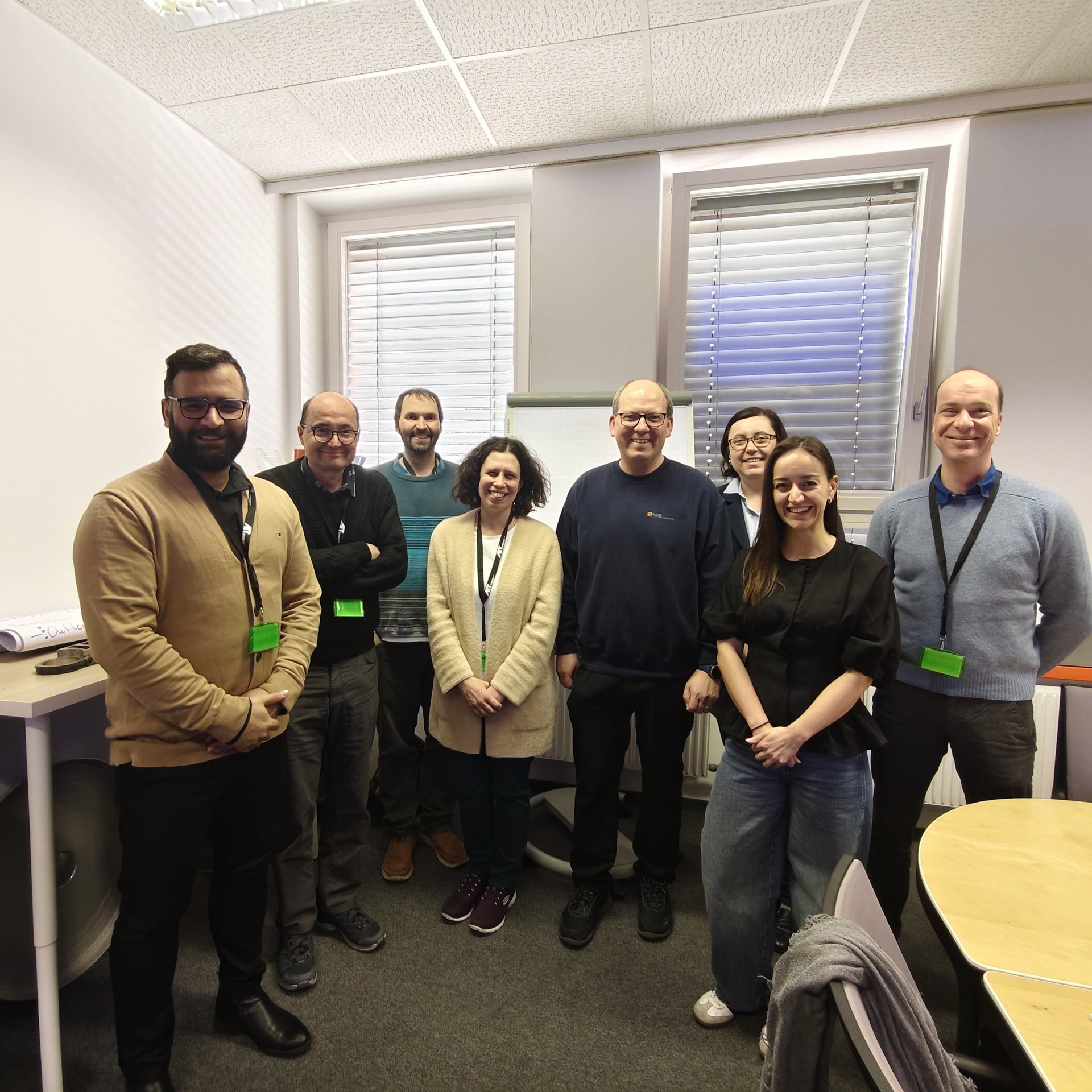
The project officially began with the kick-off meeting on 31 March 2026. In the next stages, we will test the sorting technology on real waste streams and further optimise the manufacturing process for the new materials. At the Institute for Processing of Composites and Design for Recycling, the processes to be developed (in particular the carbonisation of textile fibres during the sintering of the ceramic matrix compared to the use of conventional carbon fibres) are being assessed in terms of their environmental impact (LCA). The aim is a scalable, environmentally friendly approach that measurably reduces textile waste and enables new applications.
About the project
Project title: BeyondRecycle: Verwertung von nicht recycelbaren Textilabfällen
Funding:FFG Ressourcenwende 2025
Partner:RHP-Technology GmbH (Seibersdorf, Konsortialführung), Montanuniversität Leoben -Institutes for Processing of Composites and Design for Recycling (MUL-VV) und Waste Processing Technology and Waste Management (MUL-AVAW), Circulyzer GmbH, Materials Center Leoben (MCL)
Contact: assoz.Prof. Dipl.-Ing. Dr.mont. Ewald Fauster | ewald.fauster(at)unileoben.ac.at
This project is funded by the FFG (www.ffg.at).
The FFG is the central national funding agency and strengthens Austria’s innovative capacity.