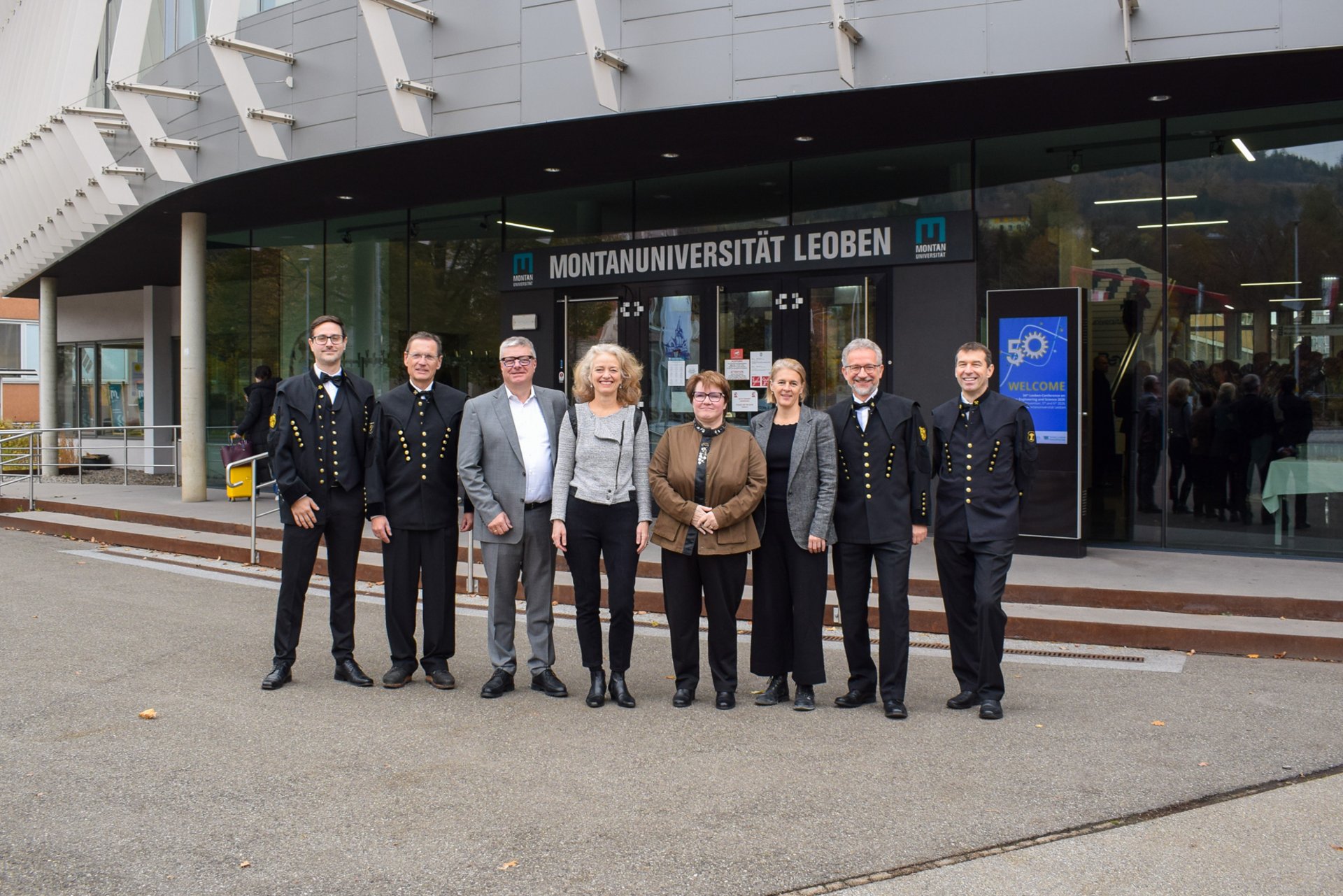
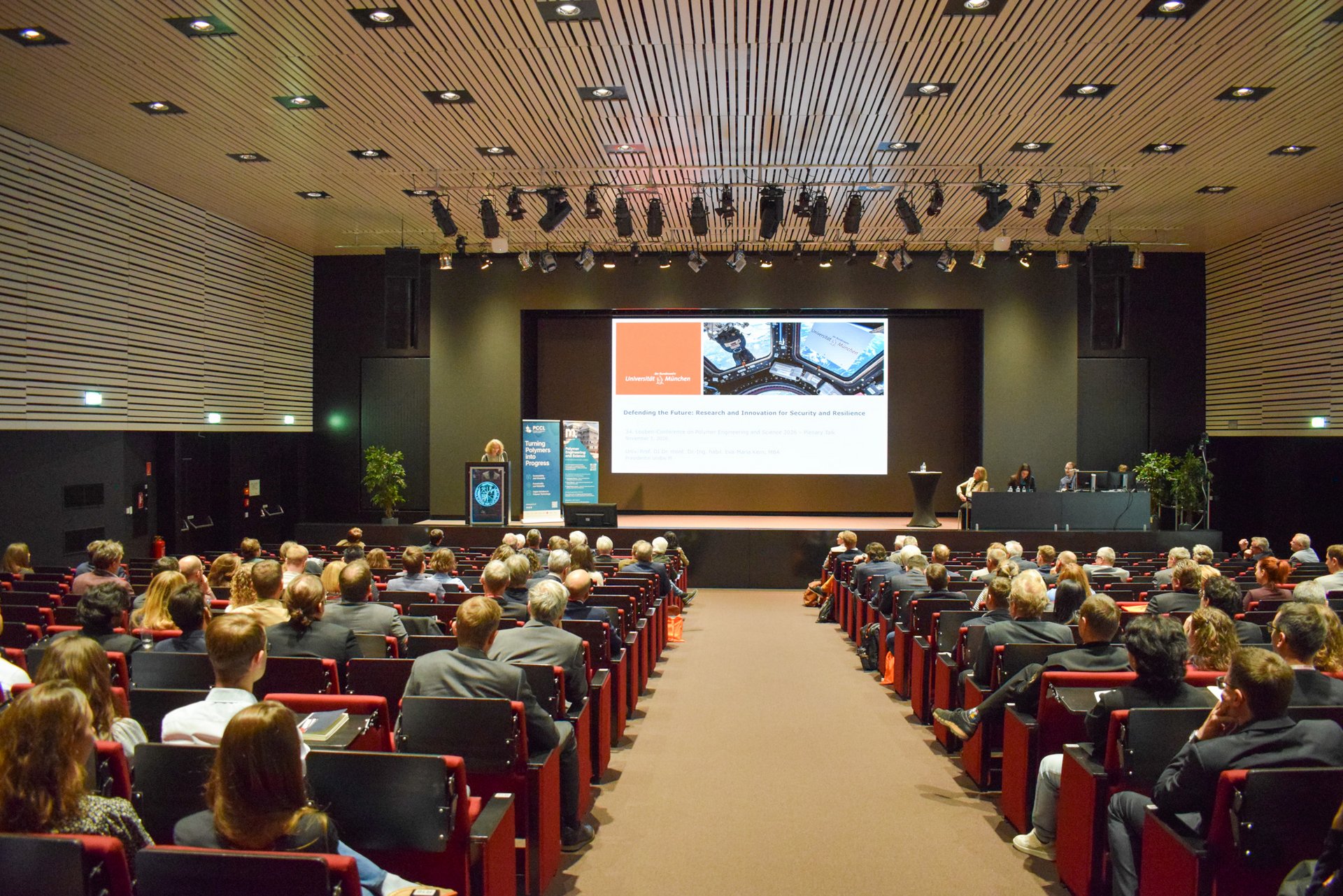
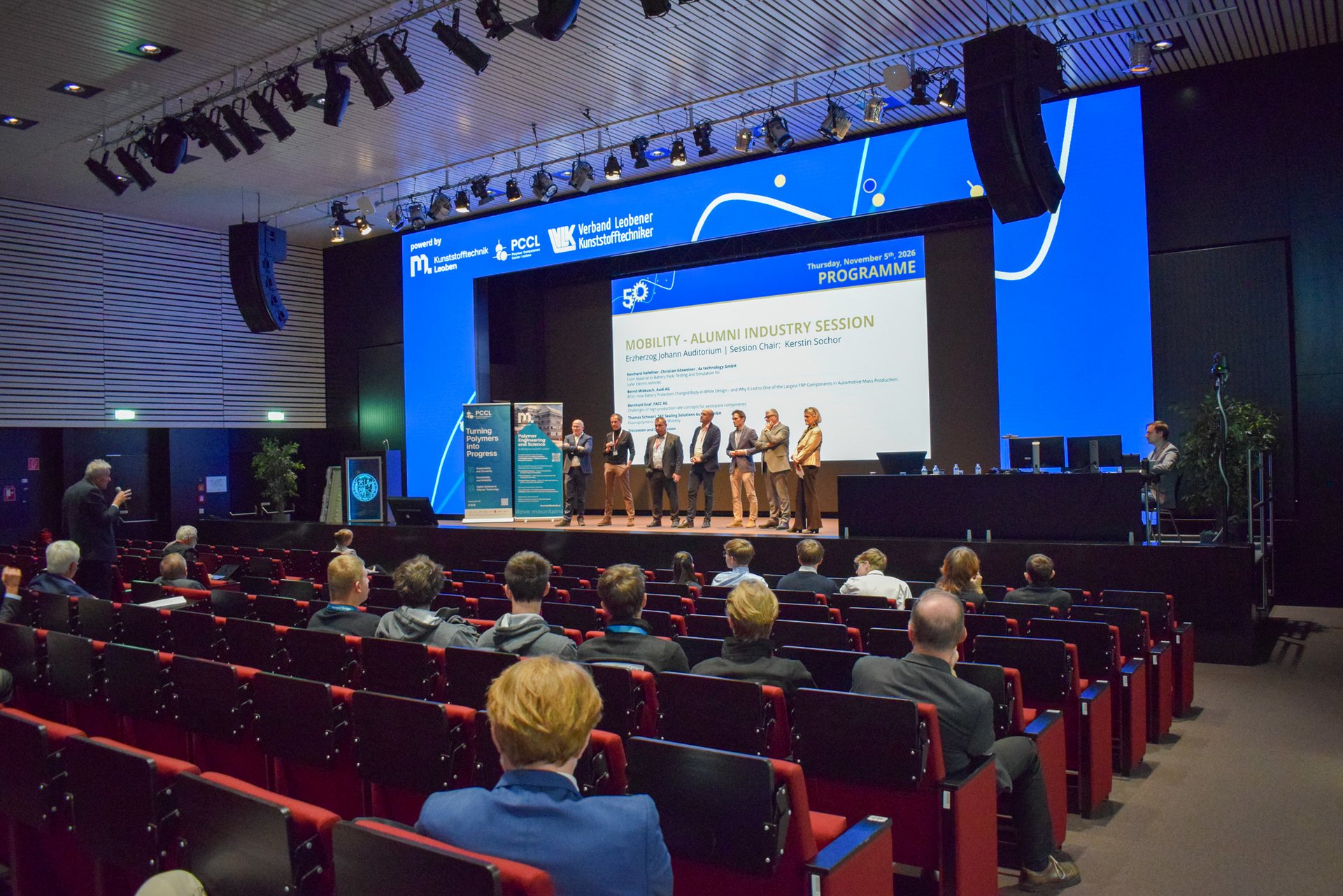
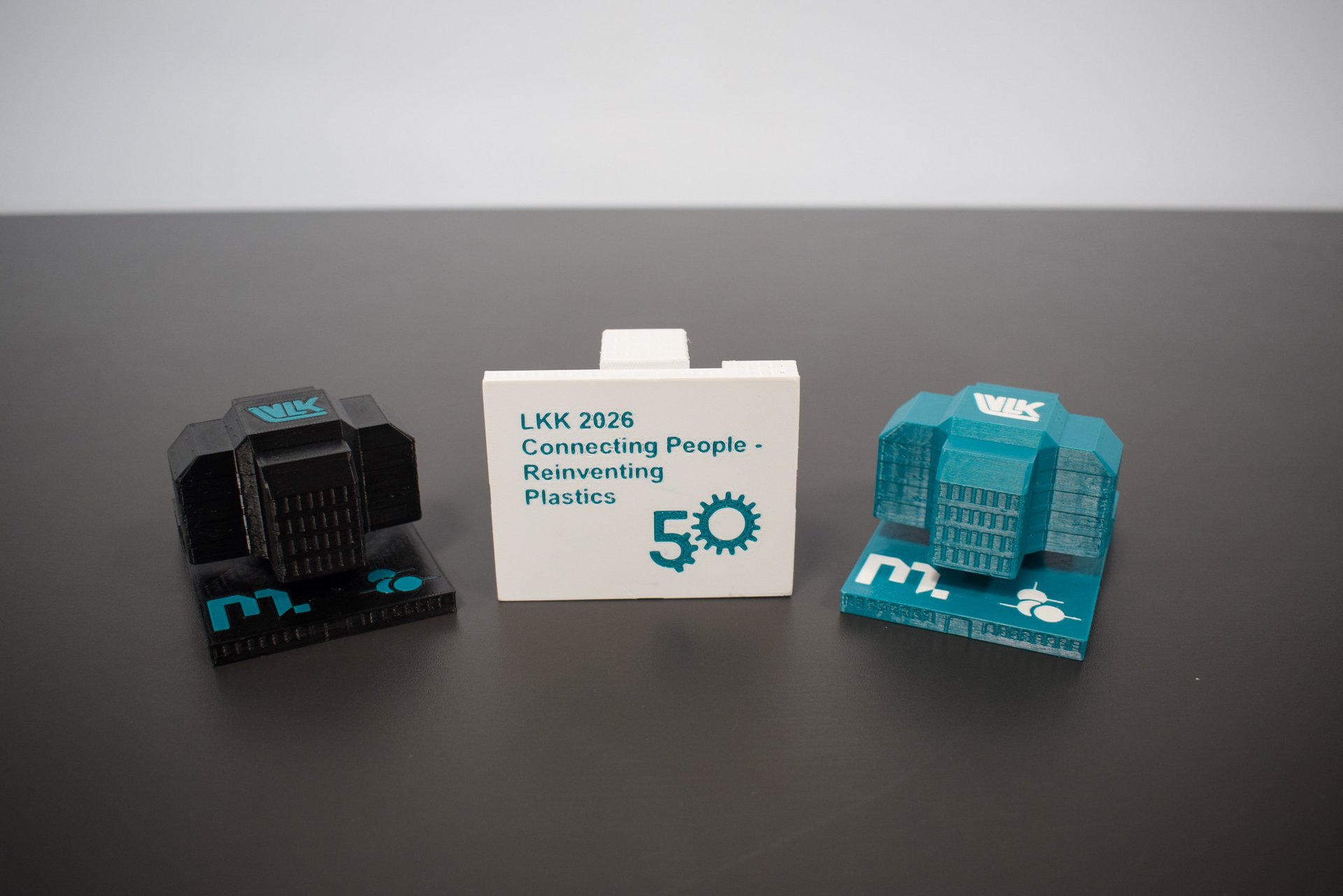
How can high-performance plastic products be developed and materials kept in the cycle? Questions like this were addressed at the 34th Leoben-Conference on Polymer Engineering and Science (LKK 2026) under the motto "Connecting People – Reinventing Plastics". It was organised by the Department Polymer Engineering and Science at the Montanuniversität Leoben, the Polymer Competence Center Leoben (PCCL) and the Verband Leobener Kunststofftechniker - VLK. Specialist lectures from industry as well as research and pitch sessions linked current scientific approaches with concrete applications.
"Whether a plastic is suitable for an application is not decided solely by a single material property. We need to understand how materials are processed, how they prove themselves in use and how they can be recycled. The LKK brings together the experts who work on these questions along the entire product life cycle," explains Gerald Pinter, Head of the Institute of Materials Science and Testing of Polymers at the Montanuniversität Leoben.
Industry experience meets current research
Characteristic of the LKK is the direct exchange between research and application. This year, the program combined "Alumni Industry Sessions", in which graduates gave insights into industrial practice, with parallel research and pitch sessions by the Department Polymer Engineering and Science and the PCCL. Poster presentations and start-up pitches complemented the lectures and also made new research ideas and young companies visible.
The broad range of applications was shown, among other things, by contributions by HEAD and ISOSPORT on high-performance and recycling-friendly sports equipment, by BMW and Audi on the technological challenges of electromobility, and by AT&S and Lam Research on polymers in electronics and digitalization. Researchers presented, among other things, new polymer materials for mobility applications, methods for monitoring material properties and the use of machine learning in plastics technology.
This combination of concrete industrial challenges and current research approaches is a starting point for new collaborations for the PCCL.
Managing Director Elisabeth Ladstätter emphasizes: "Progress depends on bringing scientific expertise and industrial requirements together at an early stage. The discussions at the LKK help us to focus our work on issues that are relevant to industry - and to transfer promising ideas into joint research projects."
Beyond the technical topics, the plenary lectures focused on larger contexts: Eva-Maria Kern, President of the University of the Bundeswehr Munich, shed light on research and innovation for security and resilience. Stefan W. Zangerle from BMW spoke about the transformation of the automotive industry, Dagmar Glatz from dm about the circular economy. Reinhold W. Lang from the Johannes Kepler University Linz and President of the Club of Rome – Austrian Chapter classified plastics in sustainable development.
50 years of the VLK as a network between studies and work
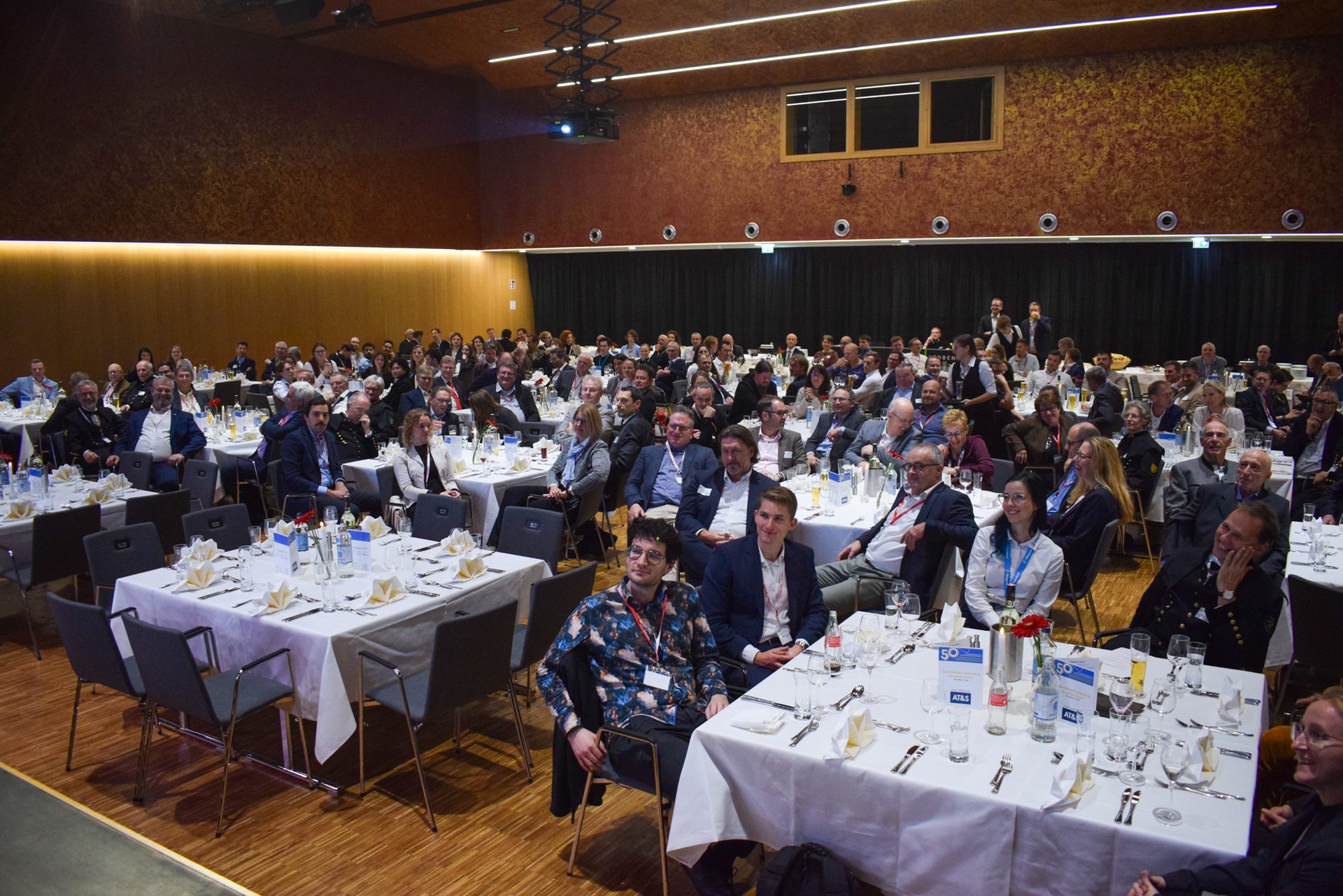
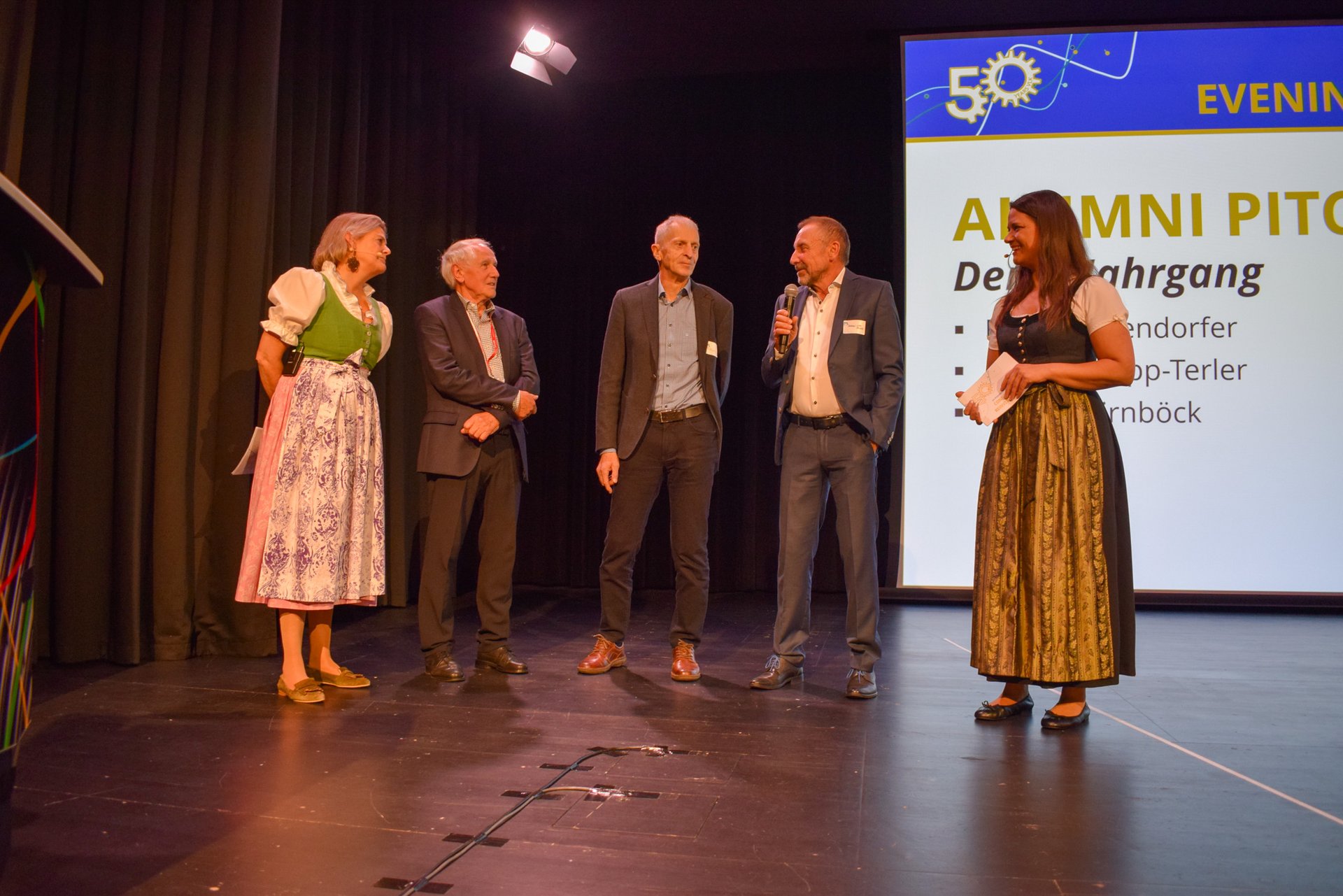
The 50th anniversary of the VLK provided a special setting for the conference. At the Alumni Night on November 5th at the Live Congress Leoben, the focus was on the professional paths of graduates from five decades as well as the future of Leoben's plastics technology.
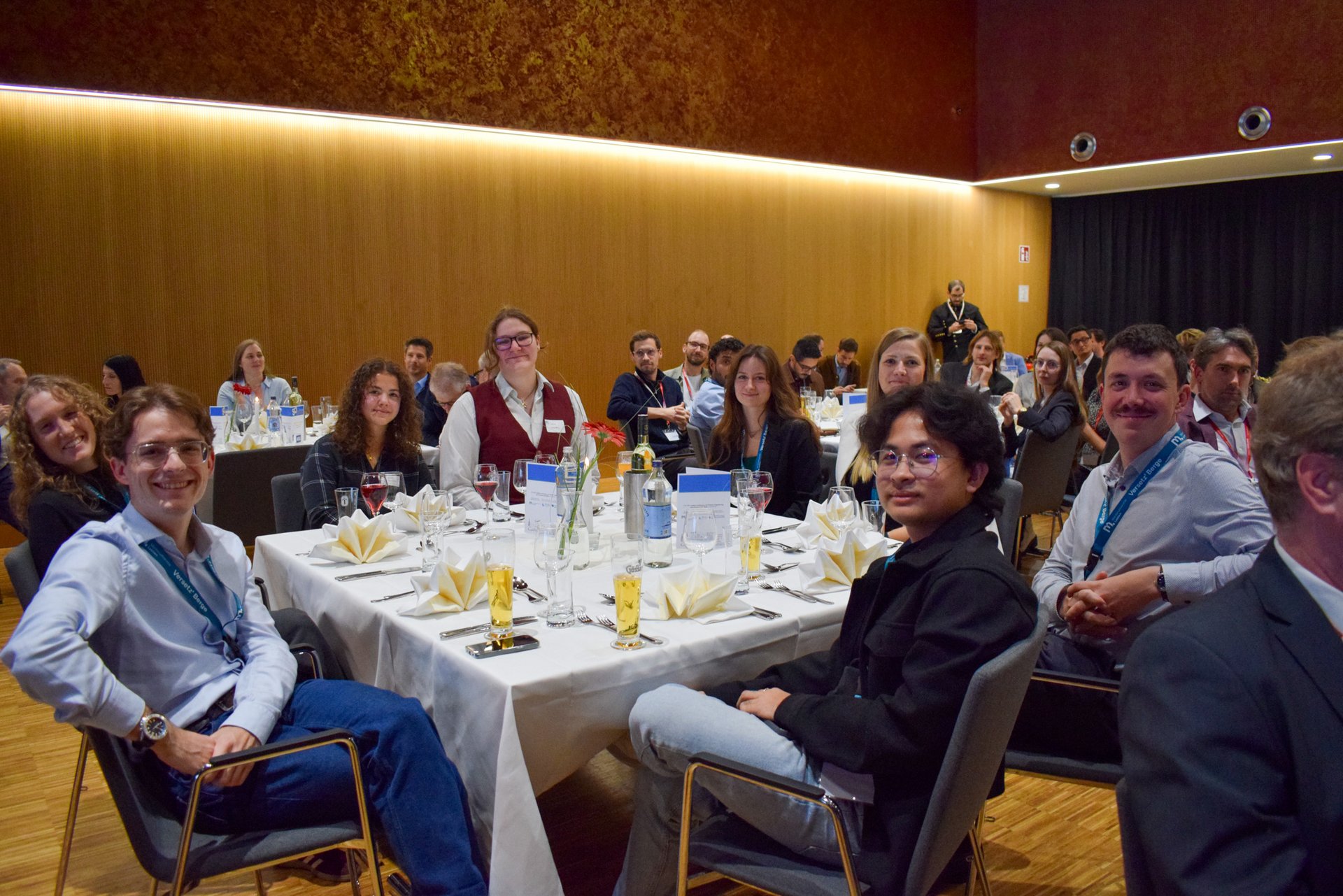
"For 50 years, the VLK has been connecting people who contribute their knowledge from Leoben to companies and research institutions all over the world. Our network thrives on the fact that members pass on their experience and keep in touch with the next generation. This year, the LKK is creating a personal framework for this: students meet potential employers, and new collaborations can emerge from the exchange between alumni and research," says David Zidar, Managing Director of the VLK.
POLYMER SCIENCE SCHOOL AWARD honors young talent
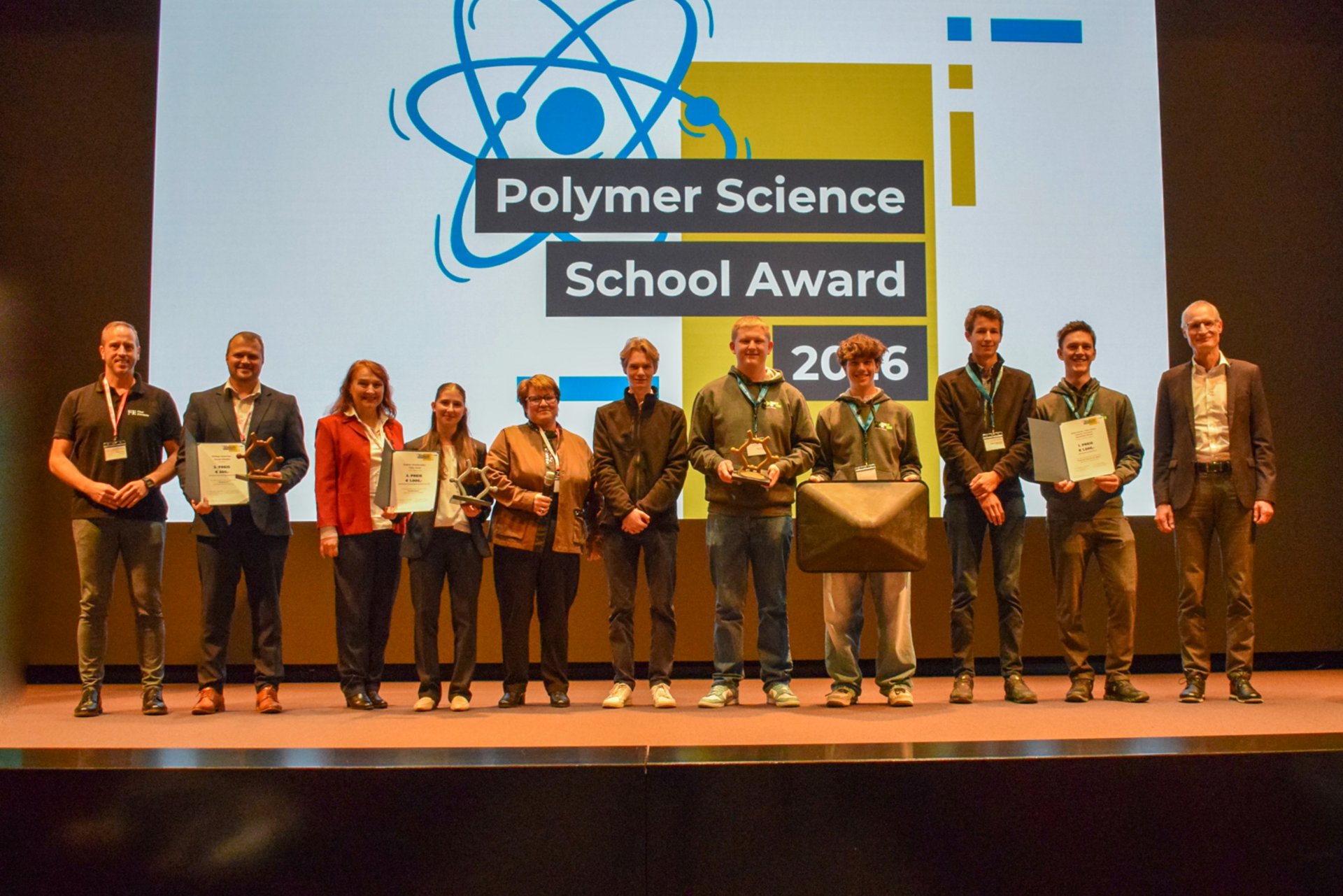
Another highlight was the presentation of the POLYMER SCIENCE SCHOOL AWARD on November 5th. With the competition, the Department Polymer Engineering and Science and the PCCL honor innovative school projects related to plastics and polymer technology. It is aimed at students in grades 10 to 13 who compete individually or in teams of up to four people. The jury evaluates in particular the novelty of the idea, the comprehensible presentation of the project and the design of the contribution.
- First place, endowed with 1,500 euros and supported by Isovolta, was awarded to Niklas Karner, Felix Holzer, Valentin Gentzsch and Maximilian Wieser from HTBLu.VA St. Pölten with their submission E-Racing Team HTL St. Pölten.
- Second place went to Sophie Waldmüller and Felix Mohr from HTL Kapfenberg for their submission entitled “Restfestigkeit”. The prize money of 1,000 euros was provided by ZwickRoell.
- Third place and 500 euros, supported by Fiber Elements, were awarded to Philipp Hammer and Jonas Kössler from TGM Vienna for their MeltMaxxer project.
About the LKK
The Leoben-Conference on Polymer Engineering and Science, which emerged from the Leobener Kunststoff-Kolloquium, is the annual polymer technology conference in Leoben. It networks research institutions, industrial partners, alumni, students and pupils and promotes the transfer of knowledge between polymer science and application.
Further information: www.unileoben.ac.at/polymerevents