
Summer School 2026
RePlastify the Future: Reinventing Plastics for Tomorrow | July 6–10, 2026
Join us for a dynamic, cross-campus Summer School exploring cutting-edge pathways to redesign, reuse, and rethink plastics for a sustainable future. Over five days—2.5 days at Montanuniversität Leoben and 2.5 days at Johannes Kepler University Linz—Master’s and doctoral students from both institutions will engage with experts, hands-on sessions, and collaborative challenges at the forefront of polymer innovation and circular design.
Further program details will follow soon.
More Infos
- Dates: July 6–10, 2026
- Duration & venues: 2.5 days (July 6–8) at Johannes Kepler University Linz; 2.5 days (July 8–10) at Montanuniversität Leoben
- Target group: Master’s and doctoral students of Montanuniversität Leoben and Johannes Kepler University Linz
- Maximum number of participants: 30
- Focus: Polymer innovation, circular design, reuse/recycling strategies
- Language: English
- Application deadline: End of May, or earlier if all slots are filled
- Participation fee: €200.00
- Included in the fee: Workshops; lunch (except day 3); coffee breaks; dinners on days 1 and 3; certificate of participation
- Not included: Travel to/from Linz/Leoben; accommodation; dinners on days 2 and 4
- Cancellation policy: Participation can be cancelled free of charge until Monday, June 22, 2026. If you cancel later than this, or do not cancel at all, you will be required to pay the fee.
Contact: Priv.-Doz. Dr.mont. Florian Arbeiter — florian.arbeiter(at)unileoben.ac.at
Program
RePlastify the Future: Reinventing Plastics for Tomorrow
| Time | Monday | Tuesday | Wednesday | Thursday | Friday |
|---|---|---|---|---|---|
| 08:00 – 08:30 | Arrival Linz Innenstadt Kepler Salon Rathausgasse 5 4020 Linz | Prof. Gerald Berger-Weber From process understanding to digital process twins. Using Python Orange for Data Analytics and Model Building | Prof. Jörg Fischer / Dr. Klaus Straka The LIT Factory as an Enabler for Sustainable Polymer Engineering | Dipl.-Ing. David Zidar Wintrust Wintersport resource efficiency and improved circular economy | Prof. Thomas Grießer Lithography-Based Additive Manufacturing: From Fundamentals to Emerging Advances |
| 08:30 – 09:00 | |||||
| 09:00 – 09:30 | Dr. Alice Lassnig Insights into Material Design for Printed Sensors | ||||
| 09:30 – 10:00 | |||||
| 10:00 – 10:30 | Break | Break | Break | Break | |
| 10:30 – 11:00 | Presentations by students from Leoben My PhD / MSc. | Prof. Zoltan Major / Priv.-Doz. Umut Cakmak From Polymer Product to Medical Product Engineering | Prof. Katharina Resch-Fauster The New Carbon Economy: From Bio-Feedstocks to CO₂ Valorization | Dr. Elisabeth Ladstätter Introducing PCCL – The Centre for Circularity, Functionality and Digitalization in Polymer Technologies | |
| 11:00 – 11:30 | Welcome & Plenary Lecture Prof. Reinhold Lang Past, Present and Future of Plastics - The (real) Big Picture | ||||
| 11:30 – 12:00 | |||||
| 12:00 – 12:30 | Lunch | Lunch/Mensa | |||
| 12:30 – 13:00 | Lunch | Travel to Leoben | Lunch / Mensa | ||
| 13:00 – 13:30 | Workshop - Linz city center | Prof. Christian Paulik Future feedstock for polymers and polymers as future feedstock | Prof. Ewald Fauster Constituents, Processing and Repair of Fully Biogenic Fiber-Reinforced Polymer Composites | Presentations by students from Linz My PhD / MSc. | |
| 13:30 – 14:00 | |||||
| 14:00 – 14:30 | |||||
| 14:30 – 15:00 | |||||
| 15:00 – 15:30 | Break | Break | Resumee | ||
| 15:30 – 16:00 | Dr.in Julia Schmitt Reinventing packaging for a circular economy | Prof. Clara Schuecker, Vasco Castro Pires, Mestre & Dipl.-Ing. Maria Gfrerrer Advanced damage characterization for improved failure modeling | End of Summer School with Cocktails | ||
| 16:00 – 16:30 | |||||
| 16:30 – 17:00 | |||||
| 17:00 – 17:30 | |||||
| 17:30 – 18:00 | Dinner Linz | End Day 2 | End Day 4 | ||
| 18:00 – 18:30 | Dinner Leoben sponsored by Department Polymer Engineering and Science Leoben Arkadenhof | ||||
| 18:30 – 19:00 | |||||
| 19:00 – 19:30 | End Day 1 | ||||
| 19:30 | End Day 3 |
Speakers
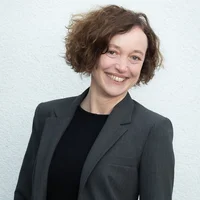
Katharina Resch-Fauster grew up in the Murtal region and began studying Polymer Engineering at Montanuniversität Leoben in 1999, later earning a doctorate in polymer physics. She pursued an academic career in sustainable polymer engineering, shaped by research activities in Leoben and at renowned institutions in the USA and Germany. In 2018 she completed her habilitation and became Associate Professor at the Chair of Materials Science and Testing of Polymers at Montanuniversität Leoben, where she leads the research group SMART - Sustainable Materials and Recycling Technology. Her research has received multiple awards.
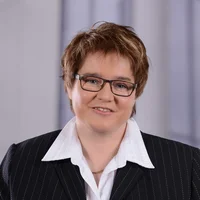
Elisabeth Ladstätter studied Polymer Engineering at the University of Leoben. She began her professional career in 1999 as Assistant to the Vice President of Production at Polytec Group, a role she held until 2001. Shethen worked as an R&D Project Engineer at FACC AG from 2001 to 2004, while simultaneously contributing as a Researcher at Polymer Competence Center GmbH between 2002 and 2005. From 2006 to 2009, she served as R&D M&PE Director at FACC AG. In 2009, she movedto the Technical University of Munich, where she acted as Deputy Head of the Chair of Carbon Composites until 2018. Since then, she has been serving as CEO of Polymer Competence Center GmbH.
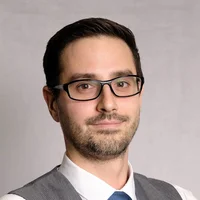
With over 20 years of experience in polymer processing, David Zidar has developed extensive expertise across a wide range of industrial applications, combining practical knowledge with a strong focus on material performance and processing efficiency. Alongside this experience, active involvement in sustainability initiatives, have contributed to a systems-level understanding of circular material flows and resource recovery.
He is currently pursuing his Doctorat focusing on advancing the understanding of process–material interactions. The dissertation investigates the impact of viscous dissipation on polymers and mold steel in injection molding, with particular attention to thermal effects, material behavior, and the resulting wear and longevity of processing machines. As project leader of WINTRUST, this work extends into industry-wide collaboration, bringing together Austria’s ski industry to align efforts toward a circular economy for wintersport hardgoods. The initiative fosters cooperation across stakeholders to address the environmental challenges of complex product systems.
The lecture will present wintersport hardgoods as a prime example of multi-material, multi-component products. Their recycling is especially challenging due to the combination of metals and diverse technical polymers. Key challenges will be defined, including material separation, contamination, and economic feasibility. Approaches to overcoming these obstacles will be discussed, along with the differences between laboratory-scale testing and industrial-scale implementation, highlighting both technical limitations and opportunities for scalable solutions.
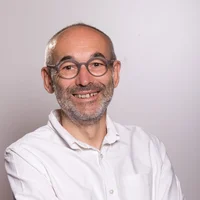
Univ. Prof. DI Dr. Christian Paulik heads the Institute for Chemical Technology of Organic Materials at Johannes Kepler University (JKU) in Linz. He earned his Ph.D. in Chemical Engineering at JKU Linz, specializing in polymer science. He worked in the polymer industry from 1995 to 2013, holding various research and international research management positions in the Borealis group. In 2010, he transitioned back to academia, becoming Full Professor at JKU Linz.
His various research interests include polymers, polymerization, catalyst technology, additives, recycling, sustainable chemistry, and high-pressure biotechnology. He actively contributes to the scientific community by organizing conferences and serving on committees (e.g., Hermann Francis Mark honor medal committee). His current research focuses on the polymerization and structure-property relations of polyolefins and specialty polymers, with an emphasis on recycling and sustainable practices. Christian Paulik chairs the board for the JKU Open Lab in Chemistry, giving young kids the opportunity to dive into the world of chemistry and attract them for natural sciences.
Since October 2019, he also acts as the Scientific Director of the Competence Center CHASE, focusing on sustainable solutions for the processing industry and guiding the strategic development of the CHASE Research Program, building bridges between academia and the chemical industry. With summer 2024 Christian Paulik also took up the responsibility as Scientific Head of the Energy Technology department of the Energieinstitut at the JKU Linz.
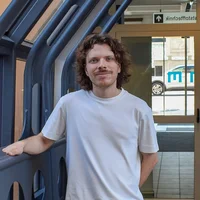
Vasco Pires holds a degree in Mechanical Engineering with a specialization in Aerospace Structural Engineering. He is currently a PhD researcher and lecturer in composite materials and finite element modeling, developing image-based methods for crack and delamination detection in laminated polymer-matrix composites. Previously, at INEGI, he investigated delamination behavior in composite single-lap joints both numerically and experimentally. This work yielded several rewards and recognitions. As an engineer, he also contributed to ESA Phase‑0 mission concept studies for multi-satellite missions to Mars and Venus, focusing on structural design and spacecraft configuration. In addition, he worked on the initial design, structural analysis, and manufacturing of a composite internal-combustion UAV for medical supply delivery in Nepal, with applications now extending to logistics, agriculture, and disaster relief.
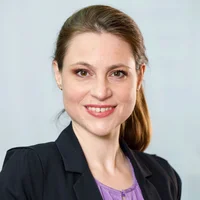
Dr. Julia Schmitt is a Research Associate at the Institute for Integrated Quality Design, Johannes Kepler University (JKU), Linz, Austria. Julia researches at the intersection of circular economy and innovation management with a particular focus on ecosystems for circular packaging innovation. She has previously published in the Journal of Industrial Ecology and co-chairs the track “Innovation for Sustainability, Circularity and Greentech” at the European Academy of Management (EURAM) since 2018. Her dissertation was bestowed with the ISPIM dissertation award.
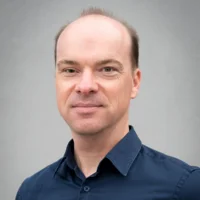
Ewald Fauster grew up in Graz and finished his diploma studies in Mechanical Engineering at the Technical University of Leoben in 2002. Following occupations at PCCL, Hot Vision Research GmbH and vatron GmbH, he earned his doctorate in 2008. After rejoining the Technical University of Leoben in 2011, he continued his academic career in the field of processing of fiber-reinforced polymer composites. As a part of a qualification program signed with the university, he spent six months for a research stay at the CCM in Delaware and completed his habilitation in 2018. As an associate professor in the Processing of Composites and Design for Recycling group of the Technical University of Leoben, he’s leading multiple research projects in the field of processing, repair and recycling of fiber-reinforced polymer composites.
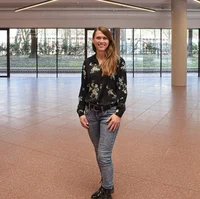
Christine Bandl is a group leader concerned with functional surfaces and sustainable polymers systems. In more detail she is performing research on surface modification and characterization of inorganic materials, carbon materials and polymers as well as on recycling related topics dealing with reversible adhesives and the improvement of recyclates.
After finishing her studies in technical chemistry at the University of Technology in Graz, Austria, she completed her PhD in Polymer Engineering and Science at the Technical University of Leoben, Austria, in 2019. From the beginning of her PostDoc career, she was concerned with surface functionalization, focusing on topics such as anti-adhesive silane coatings on inorganic substrates, surface-initiated photo-polymerization aiming at hydrophobic, hydrophilic and structured graft-polymer layers as well as plasma-modification of PTFE and carbon materials for energy related applications. Lately, her field of work extended to recycling related topics including adhesive debonding, adhesion promotion in composite materials and the prevention of VOCs and odor in recyclates. Within these studies Christine Bandl has gained in-depth experience in X-ray photoelectron spectroscopy, and published several articles in peer review journals including ACS Applied Materials & Interfaces, Progress in Organic Coatings, Polymers, Applied Surface Science, RSC Energy & Environmental Science and Wiley Small Science.
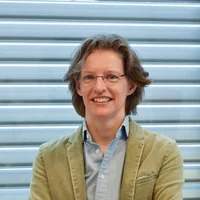
Clara Schuecker finished her graduate studies as well as her PhD in Mechanical Engineering at Vienna University of Technology in the field of mechanics and Finite Element modeling of composite materials. She spent a few years in the USA as a reasearch scholarat Syracuse University and as a Post Doc researcher at NASA Langley Research Center. From 2009 to 2014 she was running an engineering consulting firm for composite simulation in Vienna, Austria, until she switched back into academia in September 2014 when she became a Professor at Montanuniversität as the head of the Institute of Designing Plastics and Composite Materials.
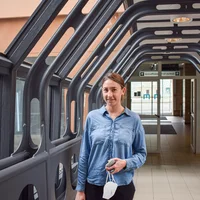
Maria Gfrerrer completed her Bachelor’s and Master’s studies in Polymer Engineering and Science at Technical University of Leoben. She is currently pursuing her PhD at the Institute of Materials Science and Testing of Polymers at the Technical University of Leoben with a research focus on the mechanical characterization of fiber-reinforced polymer laminates, particularly on damage detection using acoustic emission analysis and optical methods. During her doctoral studies, she was a visiting researcher at Politecnico di Milano, where she worked on cluster analysis of acoustic emission signals in fiber-reinforced polymer laminates for the classification of damage mechanisms.
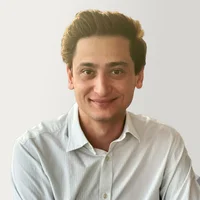
PD Dr. Umut Cakmak schloss das Kunststofftechnikstudium 2010 an der Montanuniversität Leoben ab. Anschließend arbeitete er am Institute of Polymer Product Engineering an der Johannes-Kepler-Universität Linz und promovierte 2014 zum Thema "Experimental studies on time-temperature dependent bulk and surface behavior of soft composite materials." 2021 schloss Umut Cakmak seine Habilitation mit dem Titel " Polymer Product Engineering: from elastomers to fiber-reinforced polymers " ab und 2022 wurde ihm die Venia Docendi für das Fach Produktentwicklung mit Polymerwerkstoffen verliehen.
Seit 2021 arbeitet Umut Cakmak als Senior Scientist und stellvertretender Institutsvorstand am Institute of Polymer Product Engineering an der Johannes-Kepler-Universität Linz. Seit 2017 ist er geschäftsführender Gesellschafter des Ingenieurbüros Plastic Innovation GmbH.
Seine Forschung konzentriert sich auf verschiedene Aspekte der Gestaltung und Dimensionierung von Produkten sowie Komponenten aus Kunst- und Verbundstoffen. Schwerpunkte sind Materialsubstitution, Materialmodellierung, experimentelle Mechanik, Hyper- und Viskoelastizität. Er hat maßgeblich an der Forschung und Entwicklung von Fahrradrahmen und -komponenten, die mittels Fluidinnendruckverfahrens im Kunststoffspritzguss hergestellt werden, gearbeitet und 2019 in einem Konsortium mit Plastic Innovation den ersten Fahrradrahmen, der mit dieser Technologie nachhaltig hergestellt wurde, vorgestellt.
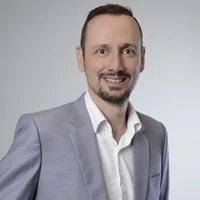
Prof. Grießer studied Technical Chemistry at Graz University of Technology and has been affiliated with the Montanuniversität Leoben since 2008. From 2012 to 2019, he headed the Christian Doppler Laboratory for Functional and Polymer-Based Printing Inks. In 2025, he was appointed Head of the Chair of Chemistry of Polymeric Materials at the Technical University of Leoben. His research focuses on photopolymerization and the design of functional polymer materials for advanced applications in additive manufacturing. A key aspect of his work is the development and investigation of photosensitive materials for applications in polymer-based optics, organic and printed electronics, surface science, and sub-micrometer photolithography.
A particular focus of his research is the development of biocompatible inks and resins for inkjet- and lithography-based 3D printing technologies, with the goal of enabling customized medical products featuring improved biocompatibility and optimized thermo-mechanical properties. In addition, his work includes polymer-based microfluidic systems for infectious disease diagnostics. Alongside his academic activities, Prof. Grießer is co-founder of the start-up company Luxinergy, which specializes in the 3D printing of individualized medical devices.
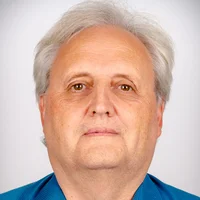
Zoltan Major wurde 1961 in Karcag, Ungarn, geboren. Er studierte Maschinenbau mit dem Schwerpunkt Werkstoff -und Fertigungstechnik an der Universität Miskolc in Ungarn. Seine Promotion im Bereich Polymer Science and Engineering schloss er am Institut für Werkstoffkunde und P rüfung der Kunststoffe an der Montanuniversität Leoben (Österreich) ab. Bis 2008 war er dort als wissenschaftlicher Mitarbeiter tätig. Anschließend arbeitete er als Senior Researcher und später als Key Researcher am Polymer Competence Center Leoben GmbH. Seit 2009 leitet Prof. Major das Institut für Polymer Product Engineering (IPPE) an der Johannes Kepler Universität Linz (Österreich) und befasst sich mit verschiedenen Aspekten der Konstruktion, Prüfung und Simulation von Polymer- und Verbundwerkstoffen und -bauteilen. Er engagiert sich aktiv in der wissenschaftlichen Gemeinschaft durch die Organisation nationaler und internationaler Konferenzen (z. B. M3d+it (2016–2024), IC3DTH 2025 – Internationale Konferenz für 3D-Technologien in Krankenhäusern, Internationales Symposium für Impact Engineering 2019 (ISIE)) und die Mitarbeit in verschiedenen Gremien. Er ist Gründungsmitglied und stellvertretender Vorsitzender der ESIS Austria Group der European Structural Integrity Society und Mitglied der ESIS TC4 Polymers and Composites Group. Neben der Polymertechnik war er an der JKU für mehrere Lehrveranstaltungen im Bereich Medizintechnik verantwortlich und etablierte eine erfolgreiche Forschungskooperation mit den Gruppen für Neurochirurgie und Orthopädie der Kepler Universitätsklinik. Darüber hinaus war er Vorsitzender der Studienkommission für den Masterstudiengang Sustainability and Plastic Management an der JKU und JKU-Vertreter im Arbeitspaket 6: Sustainable Cities and Communities im Rahmen der europäischen Campus-City-Universities-Kooperation (EC2U).
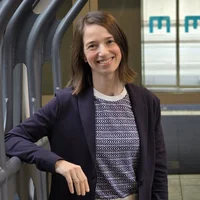
Dr. Alice Lassnig obtained her PhD at the University of Vienna, Faculty of Physics in the field of experimental materials physics focusing on the thermo-mechanical reliability of material interfaces in microelectronic applications. As a Hertha Firnberg scholar she continued her post-doctoral work at the Erich Schmid Institute of Materials Science of the Austrian Academy of Sciences. There, she investigated thin‑film adhesion and delamination mechanisms by combining mechanical testing with microstructural characterization across multiple length scales, studying metal films on both rigid and polymeric substrates.
Since November 2024 Dr. Lassnig has been leading the research group of Printed Electronics at the Chair of Chemistry of Polymeric Materials at the Technical University of Leoben, where the main focus of the group lies in the development of novel material systems for printed sensor applications and sensor designs. Research activities involve ink and coating formulations, development of materials for flexible electronics and sensor design for tailored applications.
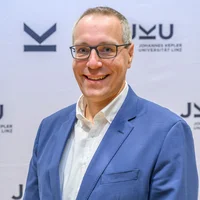
Jörg Fischer studied Polymer Engineering and Science at Montanuniversität Leoben in Austria, where he also earned his doctorate. Following his PhD, he joined Johannes Kepler University (JKU) Linz, where he played a key role in establishing the Institute of Polymeric Materials and Testing and shaping the university’s study and research programs in polymer engineering and science. After completing his habilitation, he was appointed as Associate Professor.
Since February 2025, Jörg Fischer has held the position of Full Professor for Polymeric Materials and Testing at JKU Linz. In addition, he serves as Head of the Institute of Polymeric Materials and Testing and Deputy Head of the LIT Factory. His research focuses on the circular economy of plastics, where he leads multiple interdisciplinary projects in collaboration with industry and academic partners.
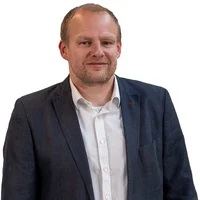
DI Dr. Klaus Straka is an engineer and researcher at the Johannes Kepler University (JKU) in Linz, Austria, where he currently serves as Head of the LIT Factory since 2024. He holds a degree in Mechatronics, which he studied at JKU between 1994 and 2002.
Before returning to academia, Dr. Straka built a solid foundation in industrial engineering. From 2003 to 2006, he worked on the automation of rolling and strip processing plants at Voest-Alpine Industrieanlagenbau GmbH in Linz, followed by a position at KEBA AG from 2006 to 2010, where he developed technological control systems for injection moulding machines.
In 2010, he transitioned to a research role at JKU's Institute for Polymer Injection Moulding and Process Automation, where he remained for over a decade until 2023. His research interests centre on CFD and DEM simulations in plasticising systems, the identification of rheological and thermal material data, and methods for statistical design of experiments.
In his current role leading the LIT Factory, Dr. Straka brings together his extensive expertise in polymer processing, automation, and applied research to advance the university's smart manufacturing and composites research agenda.
Registration
The registration is closed, we are looking forward to welcoming you at the Summer School 2026 - RePlastify the Future: Reinventing Plastics for Tomorrow | July 6–10, 2026.
If you have any questions regarding your participation, please contact us at florian.arbeiter@unileoben.ac.at.
powered by

Department of Chemistry and Polymer Engineering at Johannes Kepler University Linz

Department Polymer Engineering and Science at Montanuniversität Leoben